Thursday, January 24, 2013

Kingdom of the Mouse


There was once a TV show that would pretend take characters from history and bring them together for a conversation that could never have happened. If I remember correctly one episode was Karl Marx having tea with Queen Victoria.  My friend Harrison says the show was Meeting Of Minds but I'm not so sure. I can always do some research on that later.
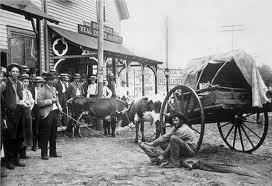


I'm wondering what might have happened if Walt Disney and Jack Kerouac met on the streets of Orlando Florida. It's not out of the realm of impossibility, Jack Kerouac lived the last years of his life there and this overlapped with when Disney started to  buy up all swampland and pastures south of Orlando.


The succeed of the Disney empire was changing America. When the Soviet Premier Nikita Khrushchev came on a state visit to the United States he wanted to go to Disneyland (and was told no).  Disneyland was the jewel in the crown but Walt Disney was dissatisfied with it. It was only 300 acres in size and was rapidly being ringed with cheap hotels and tawdry spin-off attractions. Disney dared to dream big as his corporation bought over 30,000 acres in Florida and his legal staff then had the land exempt from local, county and state laws. Disneyworld in Florida is almost it's own sovereign state much like an Indian Reservation, only more so.


Jack Kerouac is often called the father of the beat generation, a title he never cared for. The Beat Generation or the Beats are mostly misunderstood. The "beats" was not a musical reference but came from when Kerouac said "I'm beaten down to my socks". The Beats represented those who have been beaten down and excluded from the American Dream.  They questioned if the reward was worth the price. In a whole other direction the Beats were also changing America.


Jack Kerouac and his colleagues persistently presented another America, a place that would never show up on the Mickey Mouse Club or in a Disney family movie. One of the best ways to blunt a dangerous idea is to lampoon it and trivialize it. The Beat was transformed into the beatnik -that scruffy, lazy, bongo playing, not too bright, overly idealistic young adult with no common sense. The beatnik was personified in the character of Maynard G Krebs and another generation of college graduates were given the wise advise to get into plastics -or maybe mainframe computers.


Even Jack Kerouac's most popular novel, On The Road, would get co-opted by the big corporate interests and turned into the TV show, Route 66. Except on Route 66 life is rarely a struggle. The two heroes are  clean, neat and polite. They drive a Corvette and they never have any trouble finding a temporary job so they can earn some gas money and continue their adventure seeing the rest of America.  Kerouac never saw a penny in royalties and maybe out of principal would have refused the money.

What would have Disney said?  Walt Disney was the example of how far a boy from a meager background can go. He also saw and capitalized on how America was transforming from a nation of manufacturing actual physical products to an economy of selling dreams.  Entertainment was always a commodity but Disney's vision was a quantum leap forward with a complete horizontal monopoly on the presentation and a complete vertical monopoly on the production of entertainment. It has been called the Empire of the Mouse which sounds funny until you hear some of the stories of how lawyers employed by the magic kingdom protect its interests. One thing that has impressed me is how Disney lawyers have convinced Congress to twice extent copyright protection.  Mickey Mouse and all his friends will probably never be allowed to go into public domain and if you try to use any of their images in art or parody -beware you will be sued.


So back to my original thought what would Disney and Kerouac talk about if they met on the streets of Orlando Florida in 1964? Both men loved America though Disney was a hardened anti-Communist as a big portion of Kerouac's friends were Communists. Both men were known to go through bouts of depression and heavy drinking. Would Kerouac bring up the benefits of Zen Buddhism? Would Disney justify all of his actions with a copy of Adam Smith's The Wealth of Nations?  

In 1964 Kennedy was already assassinated, the Viet Nam War was escalating and Disney had only another two years before he died of lung cancer. The first anti-war protests were yet to happen and Jack Kerouac had less than five years to live.  Hippies and the counter culture had just started to take center stage in the public consciousness (ironically they loved Kerouac but he didn't like them).

Maybe it's fair to say each man appeals to a different time in a person's life. We go through childhood watching Mickey Mouse but we come of age while reading books like Big Sur.  

If Disney and Kerouac could see the world today what would they think?


Wednesday, January 23, 2013

Imaginary Vacation


It is the third week of January and a time I like to jokingly refer to as the thermal solstice. At least statistically this tends to be coldest time of the year in the Northern Hemisphere -and it's also is seen as the most depressing. You have that big letdown after Christmas, the bills from the holidays are coming in and spring looks like it's years away. A few of my friends would say if it wasn't the Super Bowl they would have nothing to live for.

Because of family and work it's impossible to get away to some place warm and sunny. So if the body can't go at least the imagination can wander. I've been Florida enough to know what's there but I certainly would not turn a chance to spend a week in South Beach, Gainesville or Cedar Keys.  I have never been to Louisiana. My wife and I have been saving up for a trip to New Orleans. Our two sons are ready to leave home and be adults on their own, so we no longer have any reason to have another sedate family vacation.

New Orleans is were the Old South and the Caribbean cross paths. I know I have a million images of southern Louisiana and they are probably all wrong. That's okay with me, I don't mind having the chance to trade in my ignorance for firsthand knowledge. But just look at the source materials that are available to me up here in Pensylvania, like the TV shows Treme and True Blood -and  books by James Lee Burke and Ann Rice.  Based on that alone you would think the whole area is filled with jazz musicians, murderers and vampires.

My first interest in New Orleans started with grade school American history. The abbreviated version taught in the classroom seemed suspiciously skimpy  and soon I was reading on my own about the Crescent City.  How the whole mid-west needed to ship everything though New Orleans if they wanted export to the rest of the world. The irony that the Battle of New Orleans was fought three weeks after the peace treaty was signed. The slave trade, voodoo, Dreamland and the jazz age, how General Benjamin Butler got the nick name "spoons" or the trek of the Arcadian French relocating from Canada to what was still French territory. All of that history is fascinating.

The next thing that drew my interest to southern Louisiana was the music of Credence Clearwater Revival. Cut me a break here, I was a kid back then, I had no idea the band was from Encino California and they were inspired by the same marginally true and overly romantic images that everyone else was feed. You add in the movies Easy Rider and Hard Times and I was hooked on the myth.

Any myth is just a cardboard cutout of the truth. The truth has depth and is always more complex then the story that gets sold to the tourists and outsiders. Slowly I started to pick up little bits and pieces of the real music traditions of the region. The Jazz, R&B and Rock and Roll were pretty easy to keep separate though you hear were each genre borrowed something from the other.  For an untrained ear the differences between Creole, Cajun and Zydeco were a bit more subtle.


I've come to appreciate sad plaintive ballads in a language I do I speak. And I always perk up to a dance beat played on the accordion. I don't know enough about the music to  have long and detailed playlists of favorites -nor could I compare and contrast one performer with another. But I know what I like and I'm open to hear whatever else is out there.


All of this and more is the Louisiana of my dreams.


So next year in New Orleans and maybe Layette too. This weekend I'll probably borrow last season of True Blood on DVD and watch them all in a marathon while trying to make beignets and Cajun coffee. True Blood is mindless pop corn entertainment but it so wonderful to see a place where all year round you don't have to wear much more than a tee shirt and shorts. The vampires and the soap opera story are just an extra attraction.  


Tuesday, January 22, 2013

Sub-Geniuses Unite


Over the weekend while ruminating over a few ideas of questionable value when somebody looked me square in the eye and said "if you're so smart". I was about ready to complete that sentence with a defensive rant of how IQ and net worth have no real connection but I let him finish. "If you're so smart -why don't you take the Mensa Test?"

That was a surprise. First I haven't heard anyone mention Mensa in years. It was a real prestige to be a member of a society that represented the top 2% of human intelligence. There's the famous Mensa IQ test and in my case I would need a lot luck and a cheat sheet to pass it.  I already know my IQ and I'm proud to say it's above average but it's far below the 150 minimum needed to get into Mensa.   
Yes, I'm in that category of sub-genius. Somebody bright enough to conceive a good idea but not smart enough to plow through all the details and bring it to fruition. The sub-genius is the titan of intellectual thought and as you might remember from high school Greek Mythology a titan was more than a man but far below the gods.   

You can now take the test online but it doesn't count. To get into Mensa you have to take the test in person ... just like the SATs.

Prometheus was a titan and he had the clever idea of stealing fire from the Mount Olympus. Sadly he didn't plan on the wrath of gods or map out a good escape. So all mankind benefited from what Prometheus did and Zeus had him chained to a rock where an eagle got to rip out his liver for the rest of eternity. In the end it sucked to be Prometheus and to this day you can go to any slightly up-scale bar at happy hour to see the metaphoric children of Prometheus, the sub-geniuses of the world, punishing their livers on discounted drinks.      

The sub-genius fills the ranks of middle management in every large organization, they are Betas in Aldous Huxley's Brave New World, they are the great social buffer that keeps the ordinary masses from eating the elite. The Russian Revolution was only possible because all of Russia's sub-geniuses had either emigrated or were killed in World War One. By October of 19 17 all that was left in Mother Russia were a few Tsarist twits and lots and lots of hungry peasants -oh and of course there were a few Cossacks mixed in, for some unexplainable reason you can't have any major event in Russian history without Cossacks being involved. 


With the elimination of the sub-genius in Russia the center did not hold. After Lenin, Stalin's purges continued to persecute the sub-genius. The Soviet Union became a place of extremes where the masses were treated like cattle and a few exceptionally talented people became national treasures.  That's why Yuri Gagarin was the first man to orbit the Earth but on the ground they still couldn't make a  can opener that actually worked.  

As tough as it is being a sub-genius it can also be lonely at the top. What seems like a whole life time ago I was part of a social circle that was made up of mostly Viet Nam Veterans. Jeff was certifiable genius with an IQ north of 150. He did a complete combat tour of duty and came to the conclusion that if the US Army just electrified every village and handed out free TVs we would have won the war. That might have sounded quite satirical but  Jeff understood that you can't win a war without a peace plan.

Through Jeff, I met Daniel. Daniel was not veteran but had an IQ of over 180. He was truly a one in a million character.  As smart as Daniel was, he was awkward around people. At that time he was almost twenty-five and never had a intimate relationship with another person. The super high IQ was like a trap, as he put it "have you ever tried to have a conversation with somebody who's IQ is 30 points lower than yours?" That was troubling thought, the average person's IQ is 100 and if you take away 30 points that leaves you with an IQ of 70 -which is the legal borderline for mental retardation. At a 180 IQ Daniel was a freak of nature and prisoner of the bell curve. Daniel could be kind and considerate to others but felt it was almost impossible to have a meaningful exchange of ideas with 99% of the world.

For a short time Daniel and I hung out together. He was working on a physics concept of how time and gravity are both particles and dimensions. That all the universe is a fractal expression of these two particles. Daniel was nice enough to show me his work and explain some of the equations that gave me the most blistering migraines.


The last time I saw Daniel he was heading out to Stanford. He said that he was never sure about me, he couldn't figure out if I was exceptionally funny or just an idiot savant of humor. To this day I can't decide if that was a compliment or a dig. I guess that the tough thing about true genius -sometimes it is so hard to understand.     


Monday, January 21, 2013

This Day In History


Today is a doubly historic day that if it was written as fiction fifty years ago it would have been seen as a bizarre and extremely improbable story.  Today is the Martin Luther King Holiday and the inauguration to the second term of an African -American President. Even thirty years ago a federal holiday commemorating Martin Luther King didn't exist and it wasn't a certainty that it would come to pass.


It was November 1983 that Ronald Reagan signed the bill that was in Congress for four years. Reagan's signature wasn't entirely voluntary but the holiday had the support of a veto proof majority in Congress and was backed by a petition signed by over six million Americans. The first Martin Luther King Day was observed on January 20th 1986.  


Arch conservatives Jesse Helms and John Porter East, both Senators from North Carolina, lead the opposition against the bill. Not all states recognized  the holiday immediately and it wasn't until 1991 that all fifty states, some of them grudgingly, gave the day off to state employees.  One huge irony is the state Mississippi still combines Martin Luther King day with the state holiday celebrating the birthday of Confederate General Robert E. Lee; Virginia also had combined the two holidays but separated them in 2000.  

Martin Luther King's life story can not be understate though some still try and ignore its significance. His civil rights movement help over-turn a century of Jim Crow laws and institutional racial oppression. It was done without violence, it was done by courageous people who put themselves in harm's way to move the principals of universal freedom forward.  Dr. King had been roundly criticized for his associations with communists and far left activists but I think it is also telling inditement on how the rest of the country turned a blind eye to the plight of four or five generations of people freed by the 13th Amendment. Conservative politicians had a chance to support racial equality but choose not to.


On this day I am thinking of a friend back in New Jersey. Chuck is an exception person, devoted family man, musician and works in post-op recovery at Children's Hospital (not an easy job). One time in idle conversation we started to talk about culture. The idea if there really was such a thing as a black or white culture in America today. So much of whatever is thought of as either white or black is so intertwined with the other and the only people that care about the divisions are the same people that want to keep the illusion of separation.       

Chuck and I compared all the different aspects of our lives. We shared the same values, we had very similar lives  and at least on paper if you looked at our education, net worth and lifestyle choices -we had far more in common than not. But then Chuck told me this story. Chuck would be first to say he's lived a "blessed" life. He's always had good job, never any problems with the law and no personal experiences with overt racism except once.


When Chuck and his wife were first married they took a trip to visit his family in Western Pennsylvania. On the drive back home they stopped at roadside restaurant for a couple of sandwiches and coffees to go.  When they unwrapped their meals they found the sandwiches were made mostly of rotting garbage.  Chuck isn't the kind of person to take something like that to heart but he did had admit that all these years later it still bother him.  There were many times afterwards where he wasn't sure about people's motives  -if he should be on guard or could safely relax. Racism is insidious because it was always there even when you're pretty sure, though not a 100% positive, it's not there. I feel America has come a long way in my lifetime but it maybe another generation before we can take it for granted racism is gone. 


I remember reading one of the essays in The World Of Mathematics by James R. Newman. It's a four volume collection and I can't remember the title essay or if the example I'm going to bring up is only part of one essay  but it was a statistical study on perceived racial prejudice. It took the example of one white and one black professor. Each taught a class of thirty students. Blacks students where 12.5 % of the college population and the other 87.5 % where white. 10 % of both student populations were openly racist. After all the math was done there was a 50/50 chance that any class the black professor had would have one openly racist student in it.  As the white professor had only a one in six chance of facing the same problem.  Even though the problem of racism was the same percentage in both populations, the perceived incidence of racism was  different for the two professors because of the raw number of students.

Still these are historic times and society has moved forward. It's unimaginable the KKK will ever have mass marches through Washington DC like they did in the first decade of the 20th century. Dr. King spoke of the day when a person is judged by the content of their soul and not the color of their skin.  I guess on the inverse sentiment of that thought, if we need to dislike each other it should be based solely personal animosity -nothing more and nothing less.  If you don't know somebody personally, then you have no right to hate them. Maybe that's enough until we take the next step towards the "more perfect union" first envisioned in the Constitution.


This is our history. It has it dark moments in contrast to it's all its brilliance. One of the great strengths of America is that we don't let history hang as millstone around our necks. But it's also one of our weakness, where we forget important lessons or remember the national narrative in a mumbled muddled mess.

Let's remember the past and keep in mind that we control the future by what we do now. We can be building a better future this very moment.


On a day like today I would like to also mention Henry Blair. He was an inventor and most inventors are heroic figures to me. What made Henry Blair even more special was that he's the first African-American inventor granted a patent in 1836. A time when it was illegal in many states to teach slave or even freemen of color how to read and write.