Tuesday, December 11, 2012

Where The Buffalo Roam


Where The Buffalo Roam, I wasn't thinking of the line from the song Home On The Range but instead was reminiscing about the 1980 movie starring Bill Murray. As movies go it one of the more obscure sideshow trivia question and answer productions out there. Bill Murray got to be Hunter S Thompson in a script that loosely combines several of Thompson's articles and the 1972 presidential campaign.

Critics panned the movie -I remember liking it.  Thought to be honest that's about all I remember -it was also the 3rd or 4th date with Jane, who would become my wife. So maybe during the Christmas break I'll have to rent it and see how much my tastes have or haven't evolve.

The evolution of perspective, the arch of a person's story line and how it's represented has always been fascinating. The commitment to make your life your art and your art your life is a complete gamble where every change along the way invites taunts of being a sell out and every refusal to change threatens to turn your work into a caricature of self parody. I've always liked the myth of Hunter S Thompson but without a doubt the real live man must have next to impossible to deal with. Then again maintaining the myth might have been the monster too big to handle and the inspiration behind his self directed exit strategy.

Change is scary because it can destroy and negate all past successes and in the end leave you nothing. One of the features of Where The Buffalo Roam is the art work of Ralph Steadman, his surreal roadkill doodles danced around the margins of the film and represented the thought balloons of Bill Murray / Hunter Thompson.

Ralph Steadman is still known for his splatter specimens of "Gonzovision" illustrations but has evolve into other styles. His most recognized work remains the movie poster of Fear And Loathing In Las Vegas but Ralph Steadman has been behind new illustrated editions of Alice In Wonderland, Treasure Island, Animal Farm and Fahrenheit 451.

One of my favorite drawing is this one to the left, where Freud shows his wife what it's like to be around a "big strong man all filled with cocaine".


Artist can be trapped in the amber of their own notoriety, the tar pit of being a celebrity. Being a celebrity is not the same as being whatever it was that got you famous in the first place.

Jackson Pollack stretched the boundaries of modern art with his iconic drip paintings. Critics call him Jack The Dripper but his work endures. One of his big break through moments was the 10 minute film by Hans Namuth, Jackson Pollack 51. It shows the painter at work and for the 1950's it gave legitimacy to the idea of pure expression. Jackson Pollock suffered with alcoholism his whole adult life and he was unable to sell his painting after changing his style and branching off in new directions. This rejection only made his drinking problem worse and probably hastened his death.


Peter Max on the other hand became a pop icon in the late 1960's and never really strayed far from what made him famous. Supposedly Peter Max rankles at the question of being relevant but then again I'm told he's relatively sane, happy and well off.  


The toxic effects of fame always remain a cautionary tale where the temptation to sell your soul or the occupational hazard of being devoured and spat out dead is steadfast constant.

Before Jimi Hendrix's death, he was working on a whole new direction in his career. He wanted to drop the psychedelic acid rock persona and return to his spiritual roots of Mississippi Delta Blues.

To this day there is over 300 hours of Jimi Hendrix master tapes that remain unedited and still tied up in legal limbo. Rumor has it the tapes are filled with virtuoso recordings of traditional blues. Not the type of music Hendrix is known for and no one from the record company or the Hendrix family is sure how to market the music or is willing to take the risk and pay the production costs up front.


Monday, December 10, 2012

The Weekend


Up until the 1990's most Japanese workers resisted what was sometimes called the two day holiday or what we think of as the "weekend". Two days off each week seemed excessive,  that much leisure time had to be bad. Because the post war Japanese economy grew rapidly it took over forty years before anyone questioned the logic behind working so hard and noticed the diminishing returns in the society. The word "Karoshi" (death from over work) became part of the lexicon.

A lot of American kids who grew up in 1980's have a common experience of either being the children of a divorced family or knowing close friends that suffered through a family split up. Young Japanese adults have a similar parallel of distant "salarymen" Fathers who only came home on Sundays to sleep and parents emotionally detached from each other. It's easy to chart the activity on a factory floor or in an office but it's difficult to empirically evaluate the drag unhappiness has on a society. 

In a paradoxical way, after a certain point more work makes people less productive. It could be argued that the corporate bottom line benefits most from a society that knows how to take some time off. As the Japanese learned how to kick back on the weekends and work something close to an eight hour day, Japan has become a more creative economy. Instead of copying and modifying other people's products Japanese industry has become a leader in patents and cutting edge technologies. Also the leisure time in Japan has helped the country diversify it's economy and rely less on heavy industry.  

In America we still have a mild disdain for casual leisure even when activities and events show a four and five fold return on investment. Leisure is rarely seen as a serious industry like manufacturing.
I don't want sound cynical but it feels like little extra leisure around Christmas becomes marginally more acceptable if you're buying gifts.

Economists have questioned the value of paid vacation time. French, German and Scandinavian workers are entitled to three times as much paid vacation time as American workers. French, German and Scandinavian are all more productive than American workers -they produce more value added wealth over the cost of pay and benefits. 


Think of how nice it would be to spend another two weeks per year with your family and friends.


The picture on the top is from the Phoenixville Firebird Festival. This has been a yearly event for the last nine years. It started off small, I went to either the second or the third one and it was attended by a few hundred people. Last year 10,000 people came, this year it's estimated that 16,000 people was there. I think those estimates were correct because I could not find a parking space within half a mile of the event. 


Please pardon the crappy pictures, they don't do the event justice. There was a small parade, the lighting of the Firebird and a whole night of celebrations and parties through out the town.

There's three things I'd like to point out. One, everybody had a real good time and this created plenty of economic activity. Two, the investment in time and material is minimal  The arts community in Phoenixville is active but small. If their activities where charted like an industry, the arts community would be the largest generator of business in town. Three, many people who would have like to attended but could not. They could not attend because they work 60-80 hours a week. Many work two or more part-time jobs.

There's a lot of reasons why some people work too much and others can't find any employment at all. It almost creates an endless argument that prevents any action. Like any other economic situation this exists because it benefits somebody. I don't know why it is inconceivable that the system isn't there for the benefit of the majority of people instead of a select few.


I hope you all had a nice weekend. Be grateful if you didn't have to work  Laws establishing paid vacation, over time pay and a better working conditions help the whole society. Worker's money go into the local economy and help the merchants to prosper. People who have enough free time and money participate in their community. Invest in local arts and person leisure both are good for the soul as well as the bottom line.

One last thought on the importance of leisure, Issac Newton did not produce any of his monumental works in physics while he was on the job. Issac Newton had stop being a professor at Cambridge due to the plague and spent two years at his home in the village of Woolsthorpe.

As the old expression goes -all work and no play makes Jack a dull boy. A whole country of Dull Jacks might end up making the greatest widgets in the world but would you really want to live there?
  

Friday, December 7, 2012

The next Harmonic Convergence


Once again I was among The Free Tribes of Granola Grazers. Don't get me wrong, they're all nice people but how many different ways can a person use words like "enlightened, empathetic or holistic" in a single conversation? I am so glad this is not a drinking a game. This time in between the politics of free trade coffee the subject of the Mayan calendar and might happen next came up.


Coming up soon, December 21st., is either the next Harmonic Convergence or the end of the world. I'm kind of confused which is which or even if I should care. The last harmonic convergence was like in 1987 when the planets were aliened up in a row  and supposedly Earth was going to be torn apart by the combined gravity or some other similar nonsense. This time its all about 13 cycles of heaven and 7 cycles of hell; and I'm now invited to two meditation circles -oh wait one of those nights conflicts with my plans to watch Merry Christmas Charlie Brown on TV.


So the Mayan calendar ends on December 21st 2012 and some people think it's the end of days. Really the Mayans of 500 years ago probably thought there was no big rush to set up another millennia length timetable. What I'm in awe of is the Mayan calendar said it ends on the solstice of what we call 2012 and that's exactly what it does. Both the Mayans and the Aztecs had spot on accurate calendars without the aid of telescopes or instruments. Their calendar is a testimony to the powers of patience, observation and mathematics -and it is actually more accurate (though less convenient) than the calendar we use today.  

But then again maybe the gods are dyslexic and we have nothing to worry about until 2021. I can relate to that being dyslexic myself. Once I was a symposium on dyslexia and told this very attractive woman how difficult it was growning up with the condition. "It was depressing -so depressing I once tried to kill myself by jumping behind a bus". The woman, with deep heartfelt compassion, hugged me and said she felt my pain. It took a good twenty seconds before she realized exactly what I said.  


You know what's the most confusing thing for a dyslexic? When somebody declares it "opposite day".

All this talk of the end of the world makes as much sense as the ghost of Fredrick Douglas coming back to judge the living and the dead. Maybe we need to believe the end of the world might come on one special day just to get us to focus on the hear and now of our lives. In truth all we have is now but it's easy to lose sight of it and let it slip away -let our days become a collection of uneventful moments and lost opportunities. So seize the day -seize every moment ...and just in case I've postdated all my out going checks for December 22nd or later.

So which one of these is the real sign of the Apocalypse? The Mayan calendar? Or the guy with the 666 license plate that I almost crashed into? 


If the world should end this December 21st then this is the song I will be listening to. Thank you John Gorka. By the way if you survive to December 22nd please feel free to contact me and tell me how the new future looks to you.


Thursday, December 6, 2012

Where you shop


At a regional development meeting the guest speaker started his presentation with the question -what were the three most visited locations in south eastern Pennsylvania? It was no great surprise that number one was the Liberty Bell / Independence Hall in Philadelphia. Number two was the Amish Country of Lancaster County and number three was the Cabela's sporting goods store just outside of Hamburg (that was a surprise).

Hamburg is a typical small Pennsylvanian city. It's look is dominated by lots red brick and stone work with plenty of architectural examples from the 1880's - 1920's. From a distance Hamburg looks like it was built by the most dedicated model railroad enthusiast. If you were trying to find it on a map, it's at the intersection of highways 61 and 78 about 15 miles (25 km) due north of Reading.


Cabela's is no ordinary sporting goods store. It's 250,000 square feet of shopping space (23,000 sq. meters).

In the next 30 years polar bears might be extinct in the wild but there are a mounted pair of them on display at Cabela's. Through out the store there are several major dioramas that would be the envy of any natural history museum as well as a huge fresh water aquarium stocked with game fish in a recreation of a perfectly natural setting.   


Below is a a sales display using an airplane that hangs from the ceiling. That is not a model of an airplane but actually a real airplane. It gives an idea of how big this one store is.


Photos from under the airplane looking down on the main floor.


Cabela's is a huge corporation as big as it stores. It has about fifteen thousand employees, a revenue of three billion dollars and about three dozen other retail locations across North America backed up with their worldwide catalogue business.

Cabela's pays no real estate taxes. They have a long tern tax abatement agreement. These days many of your big box stores negotiate this first before they build. Some call it corporate welfare others say it's an economic incentive. One thing that's troubling is how no one really keeps track of the economic growth afterwards, so there's no way to tell if the incentives expanded the economic pie or just shifted money from one group to another. A second troubling trend is how the incentives have escalated, where new retailers are allowed to keep the money collected as state sales tax or even get direct cash subsidies from state and local governments.

In the last few years, surrounding Cabela's, a Lowes and Wal Mart have been built. About a dozen fast food restaurants  three car dealerships and hotel also been constructed on what was forest and farmland. From what I understand most these retailers also get some kind of economic intensive to do what you think any business would naturally do on it's own.

So instead of paying for new schools, repairing bridges or keeping up with the core functions of government, tax money is going to big box retailers to put the local Mom & Pop stores out of business. Small businesses are forced to pay taxes that their competitors are exempt from. These days more people drive past Hamburg than through it. It's becoming the story of so many small towns in America where opportunity vanishes for the individual and where money doesn't really circulate in a community but is instead strip mined out and sent off to a distant group of stockholders. Think about it as you shop this holiday season.

Wednesday, December 5, 2012

Sister Rosetta


Yesterday I had to travel to New Jersey on business. The weather was a near record breaking warm day, perfect for leisurely driving with the windows rolled down and the music turned up. An MP-3 player can have all your favorite tunes stored in it but there's no surprises -you know what you have. One of the appeals of radio is somebody else is in control of the playlist -with a good radio station there should plenty of surprises mixed in with the old favorites.

Years ago I lived in a quaint little bungalow overlooking the salt marshes to Atlantic City. At the time it was a spare and desolate visa with the broadcast tower of WOND in the middle of it. Because we were only a few hundred yards away from the tower, WOND was practically the only AM station we could get. The signal would even bleed through the stereo and you could hear a ghostly transmission in between the tracks of every record we played. My roommates and I would tell visitors that you could pick up WOND through the toaster and on rare occasions through your dental work -of course that wasn't true but was fun to see what people were willing to believe.

One Saturday afternoon WOND had a special program about the origins of Rock & Roll. Not real cutting edge today but it was the late 1970's. Popular music was in the lazy doldrums of complacency. The great Rock & Roll revival was over, Progressive Rock was already getting long in the tooth,  Disco arrived with scorn and contempt, and Punk / New Wave was just beginning to percolate up from the underground. If anything Punk was a strong reaction to where music had gone wrong, it was a move to "do it yourself" reliance. It did not matter if you sing or play just get up on stage and do it -if you did it with enough feeling everything else will fall into place. People wondered if Rock & Roll had played itself out and had nothing new to say.

The myth was that Bill Halley and The Comets started it all with Rock Around The Clock. The radio DJ could not disagree more and played Saturday Night Fish Fry by Louis Jordan and the Tampany Five. It was a hit in 1949, three years before Bill Haley.


But this wasn't the only example of rhythm and blues breaking away from mainstream jazz and big band music to start out in a new direction. The DJ at WOND played one after another from his collection of "race records". These were songs that at that time could not be played on the radio and were usually sold clandestinely under the counter like pornography.  It was like listening to Firesign Theater's record Everything You Know Is Wrong except Firesign Theater was satire and this was real .


So Rock & Roll wasn't invented by white people -unless of course you believe one of the gags from the movie Back To The Future where Micheal J Fox's character Marty McFly teaches Chuck Berry's cousin to rock out at the prom.


The DJ kept going back into time until he played a 1938 recording of Sister Rosette Tharpe. This was not another suggestive song about drinking, partying and sex... no this was gospel but not like traditional gospel. Sister Rosette Tharpe is banging out the tune on her electric guitar and it was a revelation.


This is just a small sample from Youtube -I'm not sure this is the song I heard on that long ago radio broadcast but it should give you a hint of Sister Rosette's talent. I did see on Youtube a copy of the BBC special titled "The Godmother of Rock and Roll".

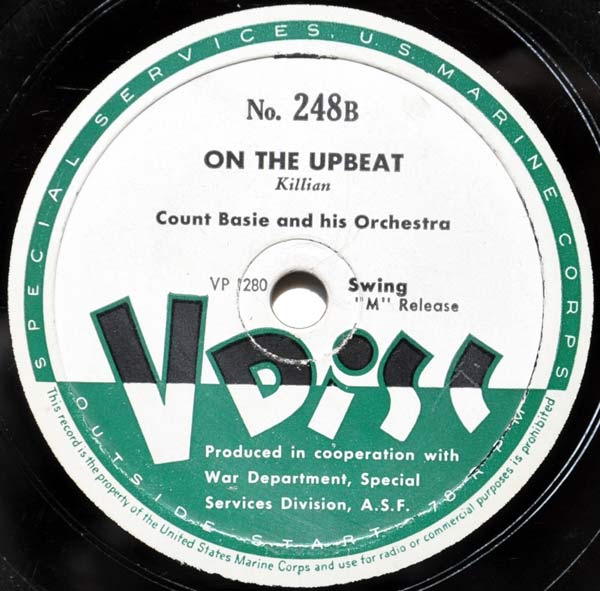
You can look up more about Sister Rosetta on your own. One note of trivia I'd point out is Sister Rosetta was one of the very few African-American performers ever allowed to record on V-disc records during World War 2. The V-discs were produced by the US government for the entertainment of front line soldiers and sailors -the armed forces were still segregated until 1947.


I once had a chance to buy several V-disc 78 rpm records and I could kick myself for not doing it. After World War 2 the V-discs were collected up and destroyed by the government. A few servicemen were even arrested and imprisoned for trying smuggle them back to the United States.


Sister Rosette like so many other African American artists became more popular in Europe than her home country. By the end of the 1960's her career was fading and was no longer able to preform due to a stroke in 1970. She died in poverty in 1973 and was buried in Philadelphia. It wasn't until 2008, after a benefit concert, a stone was placed at her grave.  


Monday, December 3, 2012

Live Cheap and Prosper

Once as a gag I did a cartoon sketch of a college buddy, Cheap John; as Mr. Spock in a moth eaten uniform, with a Vulcan salute and the caption on the bottom was "live cheap and prosper". John took being lampooned in stride because he was an easy going guy and never said no to a free gift. True to his moniker John never spent cent he didn't have to. One of the things he turned me on to was Sundays at the Philadelphia Museum Art, where instead paying full price you can pay what ever you wish. John had no embarrassment in pulling a small handful of loose change out his pocket for the admission.


 The Philadelphia Art Museum is a world class museum with over 80,000 square feet (7,400 sq meters) of  gallery space and over 200,000 objects on display. I could go on with a long stream of trivia about the building and what's inside but I know if you're really interested to can look up on-line all the same stuff and so much more. What I'm like to share is that the Museum still has "pay what you like Sundays" though now it's only once a month on the first Sunday. What would cost a family of four $60-$80 could be enjoyed for whatever you feel like paying for it. One wonderful feature is bringing young children. With so much to see and experience it is a four hour event but children do get restless. This is no big deal if you only paid a few dollars to get in and don't feel pressured to get your money's worth out of being there.

Metered parking is available on the street at $2 an hour. They use a small electronic kiosk that prints a ticket to displayed in the window. In the middle of the traffic circle in front of the Museum is a couple of hundred parking spaces at $12 for up to 4 hours and $2 for each additional hour. Also there is a a Museum parking garage available, I don't know the price on that but I think it's a bit more expensive -yes a little of Cheap john had rubbed off on me.


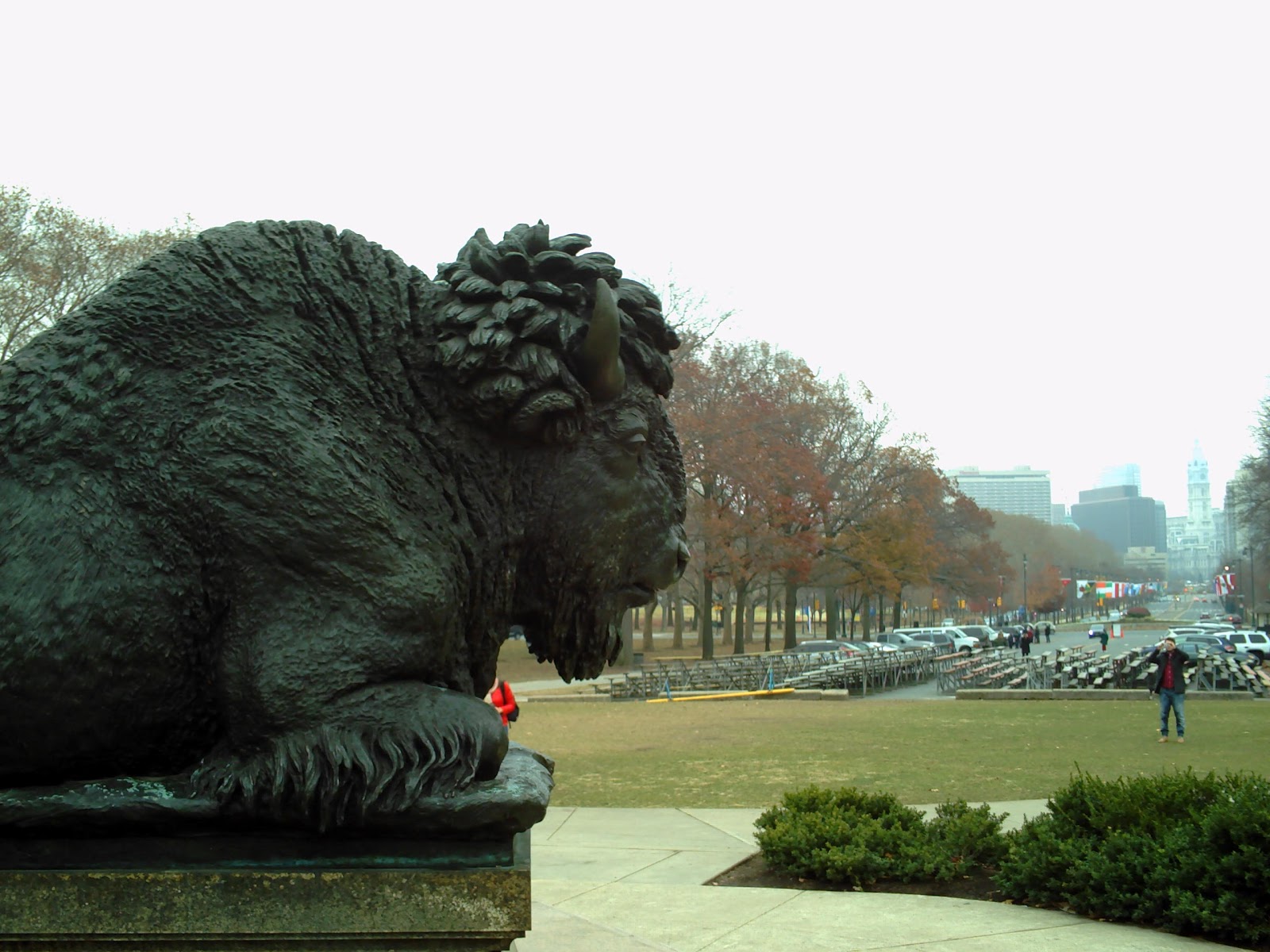
Once the car is parked You can spend a few minutes on the Benjamin Franklin Parkway. It's a wide boulevard with green space, plenty of statues and other pieces of public art. To get in the Museum from street level there is the 72 stone steps made famous by the Rocky movies. The view from the top is great and  usually there is at least one vendor selling Rocky tee shirts,

You can fill a camera with thousands of photos visiting a museum like this one.

There are paintings, statues, architectural displays and a variety of special shows. 


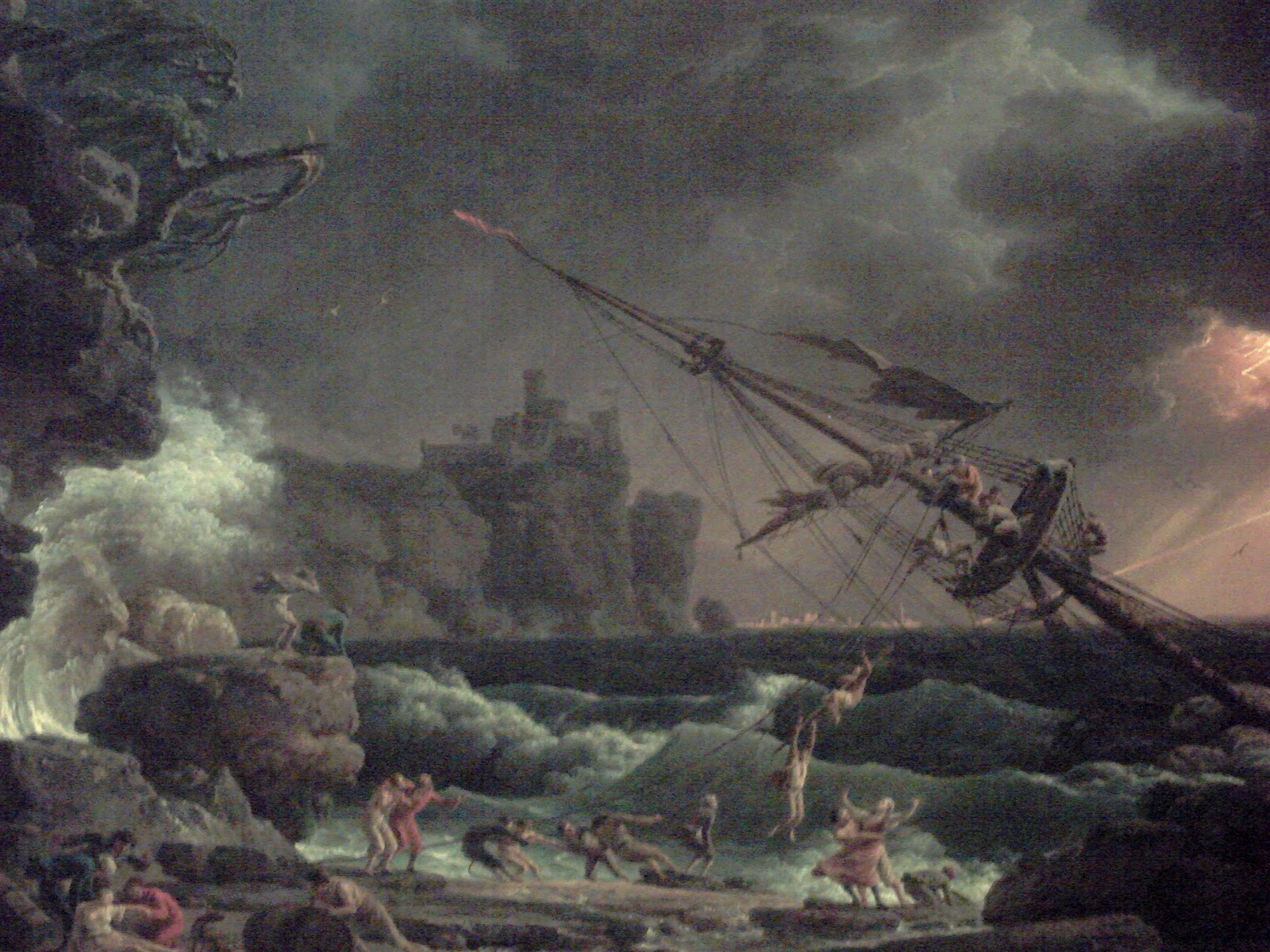
This month there is Dancing Around The Bride : Cage, Cunningham, Johns, Kauschenberg, and Duchamp. Across the street at the Perelman Building (included in with the Museum's admission) is Shipwrecked! Winslow Homer and "The Life Line". With all special shows no photography is allowed.

If you have young boys, the hall of armor on the second floor is the place to go. When my two sons where little this one room could occupy their imaginations for hours.


In a past post I had mentioned the "Circle of Bubbas" (my right wing gun toting red state friends) that I associate with. To help keep a balanced world viewpoint I also have my friends among the Free Tribes of Granola Grazers. A book that was lent to me several years back was Zombification. One essay talked about the idea of "Culture Stamps" -like Food Stamps they would be a government subsidy for poor people. Culture Stamps would allow everybody to engage in the arts which right now many are priced out of. If we want to have a nation of shared values it helps to have some way of sharing our collective heritage. Considering the current political climate -fat chance that there will be another entitlement program.

Over the last 30 years museums have become more like show business than guardians of our human legacy. Still most museums take their special place in society seriously and the majority of museums have some kind of family discount, free exhibition days or like the Philadelphia Art Museum a once a month "pay what you will" Sunday. Often you have to read the very fine print to find these discounts but the are there.


If you're a family on a budget, a couple looking for an affordable date or an artist who hasn't yet sold his first big commission then check out the Philadelphia Art Museum on the first Sunday of the month. If Philadelphia is too far away then ask your local museum if they have anything similar. Why not? -it's only logical.    


Thursday, November 29, 2012

Dead by 27


The Internet can be as much as a throw back to the past as it is the cutting edge of communications. There are a couple of dozen people I regularly correspond with, it's a little bit like in Victorian times when it was fashionable to have a pen pal and not unusual to have several at once. One person I share music with sent me this Youtube clip.

On this cold grey day listening to Amy Whinehouse  has morbid feel to the experience. In the old Celtic traditions ghost stories were part of the Solstice celebration. Trying to survive through the winter in a windowless hut with barely enough food and fuel not only made a person more vulnerable to sickness and death but psychologically each frigid, damp and miserable day must have been a heavy morose weight to bare. Okay, I'm not a winter person.

Part of the ghost story tradition remains with us in Charles Dickens' A Christmas Carol. The Industrial Revolution sweep through England and really did radically change everything. England before the steam engine was more Medieval than Enlightened. By the 1840's the changes were so fast and broad that there was a counter current of nostalgia and romanticizing the bygone past. It's one reason why the Brits appear to be on the surface a culture steeped in tradition, it was copping mechanism. If anything Dickens was a sharp observer of his times and his story A Christmas Carol was instrumental in forging old customs into new ones that looked and felt like they had a historical pedigree. One history professor credited Dickens as the father of the modern Christmas celebration.

In pre-industrial England the cities were small and most people lived and worked on agricultural estates. Part of the Christmas celebration was Mummery where the farm workers would go up to their Lord's manner house disguised in rags or costumes. The Lord of the estate was obligated to entertain the crowd (and many times mob) with food and drink. With the frightening thought of industrial workers roaming the streets of London, Manchester and Leeds; the Victorians replaced Mummery with a more sanitized Boxing Day and Christmas Pantomime or Panto. Dickens established the office Christmas party, the Christmas bonus (or at least a gift of a turkey to the employees) and the expectation that the workers would spend Christmas with their families enjoying a relatively sober dinner together.

I hear they still have traditional Mummery is some parts of Labrador. Someday I'd like to go and I'm open to invitations.

As cheery and bright as Christmas can be the ghosts of our lives still seem to be just on the other side of  the frosted windowpane as we look out on a winter's night. Which kind of gets back to Amy Winehouse, dead at age 27. It was almost a year and a half ago, I was hanging out with local radio guru Rockin' Rob Lentz when we heard the news. It was sad but not a total surprise -it was obvious her song Rehab wasn't entirely ironic. Rockin Rob felt if Amy could have stayed out of trouble for another two months she would have turned 28 and been safe -"it was the curse of being 27".

On the face of that statement I thought Rockin Rob was stretching a point. True... Jimi Hendrix, Janis Joplin and Jim Morrison all died at age 27. Rockin Rob said don't forget Kurt Cobain. Here's where the internet comes in handy, on a Wikipedia entree there's a list of 41 prominent musicians who didn't make their 28th birthday like Robert Johnson, Brian Jones and Ron "Pigpen" McKernan.

Theories abound on why 27 might be a dangerous crossroads in a musician's life. After ten or more years of sex, drugs and rock&roll a person's luck is inclined to run out. At age 27 a musician has either achieved  a respectable level of success -or already quit, got a day job and is living a sane and safe lifestyle. One old barfly mused in between shots and beers that if you're single at age 27 you feel like a loser, and if you been married a few years by age 27 -"you're ready to pull the pug on the starter marriage".  He claimed to be the voice of experience because he was married four times.

It could be more than coincidence. That in all the multi-rhythmic experiences of mortal existence maybe age 27 is one of those junctures where everything converges. And like James Joyce's The Dead (and yes that's also a Christmas Story) the ending has the metaphor of the falling snow on the landscape -as though the mysteries of life lie hidden but perceived, under that blanket of snow.