Yesterday it was interesting writing about hemp. I received dozens of comments and emails, some were funny, some were about other useful products made of hemp and a few just wanted me to write about getting high. It made me think of one friend known as Jabba (yes like Jabba the Hut) -he got that nick name partly because he has ballooned out to over 450 lbs (220 kg) and partly because he's a depraved Dionysian character who's life can be summed up in Ian Dury's song Sex and Drugs and Rock&Roll. Amazing Jabba is never with female company and we have a betting pool on how Jabba is going to leave this world; liver failure, heart attack, drug overdose, spectacular flaming car crash or a venereal disease are all odds on favorites.
Jabba's hero in life is Hunter S. Thompson and Jabba regularly repeats the quote "I hate to advocate drugs, alcohol, violence, or insanity to anyone, but they always worked for me". One of the appeals of a man like Thompson is he could take enough drugs and control substances that the everyday world we live in is more like a visit to a distant and alien planet. Isn't that why space aliens are so popular in science fiction; they are like us but also not like us, and because they're different they can tell us about being human from outside prospective.
A prospective viewpoint has a totally subjective value. On a daily basis I have to deal with a few very closed minded people that can only see the world through a narrow and tainted lens of personal prejudices as well as a willful insistence on being voluntarily ignorant. They are the kind of people who would kill off Klaatu (The Day The Earth Stood Still) or Thomas Newton ( from the Man Who Fell To Earth, the 1976 movie with David Bowie is good but the book by Walter Tevis is better).
This brings me back to yesterday and why I wanted to separate hemp from marijuana. There are still clusters of folks that are willing to forgo a multi-billion dollar industry instead of taking a chance that one more teenage kid will discover another way of getting high.
In their minds saying yes to industrial hemp is letting the cultural terrorists of the 1960's win. It's like one ultra religious family in the neighborhood, to them any mishap that falls upon a know Atheist is proof positive of God's existence and the prosperity the local heathens and apostates becomes a crisis of faith.
So part of the price of the culture wars is saying no to hemp though it's something so useful that I've come to believe it is one of God's gifts to humanity.
In Jabba's collection of must watch movies is Fear And Loathing In Las Vegas. I was a little disappointed because I read the book long before the film was made. But maybe this is what the 47% of Americans who voted for Romney fear the most, people like Jabba and Hunter S Thompson who really don't care about the recognized tokens of success.
A while back I was at a cocktail party of the local well to-dos. I kept quiet but lent out a sympathetic ear to anyone that was loosen up into a talking mood after a couple of free drinks. One impression I got was that making lots of money was as difficult and soul crushing as living in poverty. That having money was doubly wrought with anxiety because there was the fear of losing it and the nagging suspicion that poorer people where having lots more fun than them.
Just in case I got you in the mood for a little Hunter S Thompson (at least an entertaining version of him) I would suggest the 1980 movie Where The Buffalo Roam. It stars a young and funny Bill Murray, long before Wes Anderson made him an art house movie hero.
The real Hunter S Thompson was like blue-white stars in the galaxy -hot and brilliant but destine for self destruction. "The Edge..there is no honest way to explain it because the only people who really know where it is are the ones who have gone over."
From the Mailbox
I was very happy to read all of the responses I got through my Google account. This is a nice community of people. I do apologize for my clumsy lack of knowledge in computer educate. A few people in circles I belong to got this blog and were a bit confused. One thing I would like to make clear is I am not a marketing company and as of yet I have nothing to sell.
To Gary and Millie, thanks for sharing your memories of spending Saturday night with a big box of 45's and a portable record player. I hope playing "dead, retired or still touring" brings back some of the fun of finding new music and reminiscing about the old stuff.
To Nicole - I hope your son is out of the hospital soon. Nicole and her family live in the land down under and she is always good natured about my depictions of Australia as a land tippy larrikins.
Just say the word hemp and many people associate it with the heady times of the late 1960's when the Beatles sang "smoke pot, smoke pot, everybody smokes pot". And according to the mythology of the time everybody did take a toke except a handful of young Republicans and a few kids who were so socially isolated they couldn't score a joint. Of course this was not true but the legend lingers like a cloud of smoke in a closed room.
In 1971 President Nixon took two opposite strategies in his declared "war on drugs". First was 'Operation Golden Flow", in response to the thousands of combat veterans from the Vietnam War who were coming home addicted to heroin. Once stateside, but before being discharged or reassigned, each soldier had to take a urine test. If they failed the soldier was given the option for drug counselling and detoxification. Many soldiers got clean this way. Nixon was criticized for engaging in a "harm reduction plan" but always being the political pragmatist Nixon later said their were too many to jail and many of the them were decorated soldiers.
About the same time as Golden Flow, the Nixon administration did a study on the legalization of marijuana. They found that most demographic groups were very divided over the question. Obviously college students were more pro legalization than middle aged and senior citizens but in only one group was there an overwhelming majority of people against legalization. That group was mothers with young and teenage children. Nixon being both a shrewd and cynical politician was willing to exploit this and had his Justice Department do everything it can to stiffen penalties and enforcement against the use, sale and distribution of marijuana.
In the following culture wars there are people so repulsed by idea of marijuana that they can't even conceive the possibility of anything beneficial coming from it. In the 1970's medical marijuana was grown on a federal plantation in Mississippi until it was closed down as "wasteful government spending". Medical Marijuana was always seen as a Trojan Horse to legitimize and then legalize the plant.
The American public has had a slow evolutionary change of opinion on the subject as 18 states now allow medical marijuana, with 4 more pending.
One of the greater ironies of marijuana legislation is that we have three easily available legal drugs for adult consumption -alcohol, tobacco and caffeine. Two of those three are addictive and highly toxic. Even caffeine, as safe as it is, still has more deaths attributed to it than marijuana
Louie Armstrong liked to smoke a joint everyday in his adult life. He joked that he could remember when a drink was illegal and pot was not. The prohibition of alcohol in America was seen as a failed social experiment. One critic of prohibition said "it creates three classes of people, wets (drinkers), drys (non-drinkers) and hypocrites". The book Drinking In America examines the history of consumption in the United States -one fact that shocked me was how much more people drank in early 1800's before the Civil War. The greatest failure of Prohibition wasn't in suppressing alcohol because the average person did drink less and save their money to fuel the prosperity of the 1920's; the failure of Prohibition came from the corrupting effects of organised crime and the loss of faith in public institutions that people felt.
The best lesson learned from Prohibition was that alcohol was too dangerous to be freely sold in a totally open market but under reasonable government control the worse abuses can be avoided and people can be free to make their own choices. If we can control alcohol -why not pot?
What I really want to write about is hemp, not marijuana. My hope is as medical marijuana becomes legal and accepted; then like in Colorado and Washington personal and recreation use will also become legal. And if marijuana is legal then hemp will become legal.
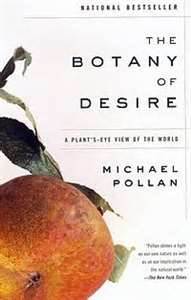
Hemp and marijuana are varieties of the same plant though not the same thing. Hemp produces lots of fiber but almost no THC as marijuana does the opposite. Michael Pollan in his book Botany Of Desire explains the difference clearly.
Industrial hemp might be one of the greatest boosts to american agriculture since artificial fertilizer. Unlike ammonia-nitrate fertilizer hemp can have a totally positive impact on the land.
I like to do research and in the past I've done it for fun and profit. In New Jersey medical marijuana is now available. It's going to be big industry that will pay taxes and have a variety of spin of products. One company in New Jersey is looking to make biofuels form the excess seeds. Hemp seed oil can go straight into diesel engine, actually the diesel engine was made to run on peanut and vegetable oils.
Hemp oil is more expensive than diesel fuel but hemp oil has components in it that are organic solvents. The company in New Jersey wants to market hemp oil as a diesel fuel additive. A 3-5% mix of hemp in diesel oil and number 6 fuel oil (a heavy tar like fuel used in ships and large commercial boilers) can make them burn cleaner more efficiently.
Hemp can be easily over sold. There isn't enough cropland to grow all the hemp needed to replace fossil fuels but the same can be said about the corn that is used to make ethanol. Hemp can be grown on more marginal than corn and biofuel is only by-product. No other plant produces fiber like hemp. It can be use for paper. cloth and building materials. Hempcrete blocks are made from hemp fiber concrete, they are strong, light and carbon negative. That means the blocks trap more carbon than the manufacturing process releases.
Five Acres And Independence was publish during the Great Depression. It was the original manual for living off the grid. The main premise was with a five acre farm and a part time job a family could prosper even through hard time. An acre in garden crops, an enclosed acre of chicken coops and two acres of a cash crop would provide most of a family's basic needs.
Today hemp could be be one of those cash crops that can make small family farming practical again.
Now you might ask if hemp is so good why isn't the rest of the world growing it? The rest of the world is. China is the world's largest producer of industrial hemp as the United States is still a closed market. As a bit of trivia about 45 pounds (20 kg) of every Mercedes Benz is made of hemp based plastics. Until the 1937 Marijuana Tax Act the United States grew hemp and there didn't seem to be much of a drug problem back then. The United States Constitution is printed on hemp paper. If hemp paper and cardboard could be produced in the United States the demand for wood pulp would be cut in half -so if you really like trees, grow hemp.
Joel Salatin owns and runs Polyface Farm in Virginia. A century ago the farm cultivate corn until the land was exhausted and the pretty much abandoned. Everything I want To Do Is Illegal explains step by step how Joel Salatin brought the farm back to productivity using organic technics and the whole time making money at it. This is not experimental farm, it doesn't get grant money, this farm pays for itself. Add in a cash crop like hemp and organic farming would have a solid foundation to work from.
I take a Libertarian approach to marijuana. If it was made legal tomorrow a few of the dopey stoners might come out of hiding and stagger around bleary eyed but that's not so bad. Like after the end of Prohibition the public embraced drinking as cool and hip until it reached a high point in the 1960's with the three martini lunch -since then we have become a rather sober nation where almost half the population doesn't even drink.
Let's play a game, do you know who these people are? With all the mass media that we get bombarded with either you recognize them immediately as the Insane Clown Posse of Detroit or you stare at the picture and mutter WTF?
With the internet and a billion smart phones, tablets and lap tops the average person has the kind of access to information that's beyond the wildest dreams of the most visionary thinkers of only a generation ago. So if you don't know who the Insane Clown Posse are, well you're only a couple of mouseclicks away from enlightenment.
I've always been an old school type of person. I enjoy taking advantage of technology, this blog is a lot easier than printing a zine but I am concern that people spend too much time in front of a screen.
I was reading a medical paper on the development of the first artificial retina. It is thin membrane chip similar to the chip in your digital camera. The amazing thing to me is the implanted chip sends its signal directly to the optic nerve and the person actually sees an image. It's not only a miracle of modern medicine but it's another step towards direct computer to brain interface.
Ten or twenty years down the road the boundary between our minds and cyberspace might not even exist. Many of my friend just roll their eyes when I say stuff like that and usually reply with "like duh - it's coming"
I worry about the quality of human interaction. The more time we spend in the cyber-world the less time we spend face to face with real people. As the cliche goes -a million friends on facebook but no one to go out with on a Saturday nigh.
Computers and all their spawn of mobile devices are never going away but maybe we can use them to help bring people physically together. One thing I am grateful for is how internet can fact check almost anything. Think of how many bar fights and tons of erroneous BS was nipped in the bud by going to Wikipedia.
Back to game playing. When hanging out with a few friends the conversation turned to music of the 1980's. Someone asked if George Michael was still alive. "Of course" I said and then wove a tall tale of how he was making a movie. It's a murder mystery where George Michael reunites with his old band and while on tour each member of the band is suspiciously killed.
Finally I was challenged with the question of what this movie is going be called? "Silence of the Whams" I replied. You could imagine the groans and at that point nobody had to fact check me.
But we did have fun afterwards remembering old music acts and looking them up on-line. So the Insane Clown Posse are alive and well, and recently came out of the closet as evangelical Christians. You know that still doesn't sound right.
Dick Dale, just beat cancer and is playing clubs up and down the Californian coast.
Elliot Murphy and Jonathan Richman are both big hits in Europe but now almost totally unknown here in America. What? You don't know who either of these guy are? Really? They were once great...no, really.
Somebody in our group was a Hawkwind fan. I impolitely asked if they were even still alive but not only are they happily above ground some of their newest music is their best. After than we had fun laughing at the mangled English of The Cardigans but were impressed with their musical arrangements.
What I'm getting at is that day we used the computer and the internet to bring friends together. Instead sitting at home and clacking away on the keyboard alone, we use the computer as though it was our own music library to shared our favorite tunes, being both presenter and critic of some forgotten gems of pop culture.
We plan to do this again real soon, dredge up those acts that have fallen off the radar and ask "dead, retired or still touring?"
Be creative, play games. Don't just be a passive consumer of what's on your screen. here are three videos for you, are they dead, retired or still touring?
I don't know where you are right now but where I'm at it is cold and raining. The skies are 50 dull shades of battleship grey -it's just a small preview of the winter weather that's ahead. As you can guess I don't like winter weather. About this time every year I suggest to my wife we should sell everything and move to Belize.
Now one place I'm really glad not to live in is the Italian village of Viganella. Near the Swiss border in the bottom of a steep alpine valley, the village of Viganella stays in the shadow of the mountains from November 11th to February 2nd every year. The original village was founded during the dark ages as a remote safe place to hide from the marauding barbarians that's brought down the Roman Empire.
After World War 2 when the people of Viganella realized that the Goths and Vandals were no longer freely roaming Italy and a modern paved road connect them to Milan, the village went into decline. The idea of 82 or 83 days of winter darkness is hard to imagine, it's something other people would have to travel to either of the poles to experience. In 2006 the village was down to about 200 residents but as ingenious solution was constructed, a 5 by 8 meter mirror to reflect sunlight into Viganella.
The mirror is a heliostat, it moves to follow the sun and constantly reflects daylight into the town square like a spotlight. I guess it also it means that once few steps outside of the village it's dark again. There was a movie made about it in 2009, Lo Specchio (The Mirror). I think I watch it next summer when I'm warm and apathetic about winter.
Every culture outside of the tropics have a winter or end of the harvest celebration of some kind. Today is Diwali, the festival of lights or actually the first day of the five days of Diwali. Because the holiday is tied to the traditional Luna calendar it could fall on any date from mid-October to mid-November and like Hanukkah it's during the New Moon.
I can't say I know much about the holiday other than a few bits of trivia. Many Indian families will clean their house from top to bottom so that the Goddess Lakshmi will bless them with wealth and good lock. There are usually firecrackers to ward off evil and plenty of sweets and refreshments for guest who are invited over in the sparkling clean homes of their hosts. That sounds pretty good to me.
As a side note tonight in Philadelphia there is Diwali celebration at the International House at 3701 Chestnut Street, $10 admission, please look it up on-line for details.
Of course after the Rockwellian holiday of Thanksgiving is Christmas. In our household we have always be very sedate about Christmas trying our best to keep it from being an orgy of gift giving and over the top consumerism. The real start of the Christmas season for us id Saint Lucy's Day.
My friend Frank Wolfe is planning a Saint Lucy's day Party on December 9th. Frank hand makes and sells Angel Greeting cards and at the party he will unveil a new angel for 2012.
As an odd bit of coincidence Saint Lucy or Lucia is maybe one of the few things Sicily and Sweden have in common. In the 4th century Lucia lived in Syracuse Sicily and was promised off in an arranged marriage. Lucia wanted no part of that because she had promised to keep her virginity as a sign of her devotion to God. Her husband to be denounced her as a Christian and Lucia was blinded then executed. Back then the Pagans were in charge and they had their fundamentalists to enforce the faith.
The feast day of Saint Lucia spread through out Europe and was particularly popular in the Scandinavian countries, most of all Sweden. Old Norse Pagan traditions were incorporated into the feast day and it was so entrenched into the culture that it's one of the few feast days the Lutheran Church recognizes. It's funny how many times people are willing to change the faith they worship but still hold on tight to the holidays they celebrate. It's one of the reasons why Christians have Christmas in December and have a holiday called Easter instead of Resurrection Day.
I will leave the the details of any holiday for the purist, the historians and fundamentalists to argue over. The real purpose for me is to mark the passing of time with friends and family -with sweets. Somedays it's the only thing that will get me through until spring.
In November 1927 Stalin was planning his final moves to expel Leon Trotsky out of the Communist Party and eventually out of the Soviet Union. Since Lenin's death three years earlier Stalin wage a successful war of propaganda against his rival.
Art through out recorded history usually went beyond simple decorative beauty. It was the visual message of myths, religion and power. The monuments of kings and battles may have been artistically stunning but they left no doubt who won and who is in charge.
Up until the Industrial Revolution the artist was customarily the pet and play thing of a rich patron. And if the rich and powerful were paying the piper then the artist was obligated to play the tune. In Medieval Western Europe the Church had the deepest pockets and naturally commissioned most of the work.
During and after the Age of Discovery Europe developed a growing merchant class These people were not as rich as the landed gentry but they had similar tastes or maybe better said the nascent bourgeoisie where interested in finer things in life and they willing to spend their money to show off to friends and neighbors. Artists like Rembrandt were able to paint portraits on commission by day and create masterpieces by night. Other artists like Albrecht Durer were able to capitalize on printing press selling relatively inexpensive engravings and woodblock prints to the masses.
The big game changer was photography. Cameras became the unblinking eye of recorded reality. Except for the very rich the portrait photographer took over the place of the portrait painter. Artist in the western world were struck with an existential question of what to paint? Here is where the romantic movement came in, the artist would paint the feeling or the impression of the moment. the artist was to record the camera could not see.
The romantic artists where the first to fit the stereotype of the starving artist living on the edge of conventional society. Most of the artists in the movement believed in social equality, questioning authority and were against slavery, capital punishment and exploitation. They championed the bohemian lifestyle and turned their nose up at bourgeois values.
Now back to Stalin. Stalin understood the power of words and images to shape ideas, that's how he defeated Trotsky and Stalin was willing to art as a tool of social control. Like no other country in the world the Soviet Union was to embrace Social Realism as the official artist style.
Social Realism had it roots in France as a reaction to Romanticism, forty years before the October Revolution. The Social Realists of France saw the real truth not in ambiguous smears of color and form but in crystal clear renderings of the common people. They painted the lives of the working poor in images that may or may not have been factually true but were true on a deeper level.
Social Realism, during and after Stalin, became the "proletarian art" where all workers were seen as strong and noble and the soldiers of the revolutionary vanguard as brave and virtuous as they march forward their inevitable victory. Stalin saw the state as "the engineers of human souls".
"Life as become better, life has become happier" -Stalin There is almost as much truth in that statement as there is irony. Until the 1860's most Russians lived as serfs Serfdom was virtually the same as slavery; and when the serfs were emancipated being a free peasant was no big improvement.
Under the Czars Russia was rapidly industrializing but it was a form of "crony capitalism". The Czars handed out monopolistic privileges to their friends and allies. The average worker even if they were an exceptional talent might be promoted to shop foreman but had little or no chance of rising above that. Under Communism many peasants saw their lives improve and the nation quickly develop.
Cheap mass printings of posters reinforced the message of a brighter future and also help distract the average Russian from the reign of terror during the purges. News of the purges had leaked out to the west but it wasn't until the fall of Communism that the extent of the purges were publicly known. Stalin presided over a government that killed more of its own people than the Nazi invasion of World War 2.
By 1934 Stalin had all independent art unions and collectives abolished. The NKVD, the Soviet state police became the arbiters what was acceptable art or decadent art. And the poor artists that were trying to expose truth and promote equality through art became a criminal of the state. Like George Orwell would point out in his book 1984 -nothing is expressly forbidden but everything is potentially a crime. The surviving Soviet artists knew how to self censor and stay safe.
As an art style, Social Realism still makes an appearance whenever there is an attempt to project an image of strength. These days Social Realism is ether thought of as propaganda or parody. Romney might not have seen the mixed message here but the influence is undeniable.
Social realism made its mark in America, mostly in the 1930's. The Great Depression exposed the shortcomings of capitalism and the intellectuals on the left wanted to change the national narrative from focusing on the titans of history to glorifying the common man, the average person.
In one event where circumstances overshadow the art is when Diego Rivera was commissioned to paint a mural in the lobby of the RCA building in Rockefeller Center.
Today the RCA Building is known as 30 Rockefeller Center, the home of NBC and the building made famous by Tina Fey's comedy TV show 30 Rock. But don't expect to see Diego Rivera's mural there.
Rockefeller Center was the largest private investment building project in the 20th Century, 19 commercial buildings covering 22 acres of mid-town Manhattan. The cost was over 250 million dollars in 1930. It was the high holy temple of capitalism.
When it was discovered that Lenin's face was part of Diego Rivera's mural Man At The Crossroads, there was an uproar. Out of artistic integrity Rivera refused to change the mural. Rivera was then promptly paid and the mural covered over. The story makes a both an interesting parable and legendary tale.
Social Realism is so entwined with propaganda many times it's hard to know where one ends and the other begins. Like art of the ancient world, the statue on the left was erected in Prague in 1951 by the Soviets. It commemorated the Red Army liberating the city in 1945. To the Czechs it was a message that was loud and clear, who won the battle and at least for the moment who was in charge.
As one last note, sometimes the art becomes the story instead of the truth. Saint Francis of Assisi is the Catholic patron saint of animals. He was well know for his fervent faith and sincere kindness but there are no historical accounts of animals having any deep affinity for the man..
The legend of Saint Francis and his connect to "beasts of the field" comes from a group of painting started by Giotto di Bondone showing the saint preaching to the birds. Giotto was born about thirty years after the death of Saint Francis.
Have you ever heard the expression "that's for the birds" to say something is silly or ridiculous? That expression predates the days before Shakespeare. In Giotto's time it was considered vulgar -an actual waste of canvas and pigment to paint the image of peasants. The birds in the paintings were representatives of the poor people Saint Francis did preach to. The riff-raft and great unwashed of the 12th and 13th century could only be seen as birds or not at all. To paint real peasants, until the Social Realists in 19th century France, that really was "for the birds".
A couple of centuries after Saint Francis's death the birds in the paintings were taken as literal and the general public began to believe real birds flocked to hear the saint speak.
Here's one toy soldier you don't get to see often enough, though isn't this one of the logical conclusions of war?
This Sunday is Veteran's Day, in the beginning it was originally Armistice Day to commemorate the end of World War . Back then it wasn't World War 1 but instead it was the Great War, the war to end all wars. It was really the first war of mass industrial slaughter that lead to an even more terrible conflict less than a generation later. It was only then historians and politicians had the concept of "world war" volumes one and two.
On the eleventh hour of the eleventh day of the eleventh month in 1918 there was a ceasefire on the Western Front, for all practical purposes the war was over even though hostilities continued in the east and around the Ottoman Empire with the very last casualties on June 21st 1919. For a moment the world was ready to swear off armed conflict as a way to settle disputes, it was a short lived moment as nations resumed the race to find better ways of killing each other and refining the political manifestos to justify it.
Wilfred Owen may have been the best poet of World War 1. Few people have heard of him because he did not spare the reader about horror of war. Like Homer, he was willing to describe the detailed truth of what truly happened. Owen was no Lord Tennyson. Ironically Wilfred Owen was killed on the Western Front November 4th, 1918 and the news of his death didn't reach his parents until the the 11th, the day the Armistice was declared.
In the face of hyper-nationalism it is a rare voice that questions authority and tries to be rational in the face of fear. Wilfred Owen's poem takes an opening line from Horace's ode "Dulce et decorum est pro patria mori" -it is good and right to die for one's country, and examines what that means.
I was introduced to this poem in a college cafeteria and while sitting in with a group of Vietnam veterans. Over the years I have heard this poem recited in shrill dramatic indignation but the first time was different. Read aloud by somebody that knew what combat was. Him and I shared a couple of classes and eventually he told me about his time in a behind the lines unit. The experience was so traumatic that he felt he could not return home and live among normal people -so he volunteered for a second tour of duty.
Wounded near the Cambodia boarder he was sent home or as he would have said "forced home". He got into college on the GI bill and loved it. Loved it so much, I had to ask why? He looked at me as though I asked silliest question and answered "the girls are pretty and I'm not required to kill anybody".
I can still hear him reciting this poem from 35 years ago. In that cold somber voice of experience.
.
I guess every war is fought with the illusion of victory. One of the best books to scrutinize that illusion and see how it breaks down is the Guns Of August by Barbra Tuchman. As she tells the history of the first month of World War 1 you see how all the parties run blindly into an epic tragedy and can not get out once trapped in it.
Another book worth reading this weekend is Kurt Vonnegut's Slaughterhouse Five. Without giving away any of the plot, two quotes come to mind.
"The nicest veterans in Schenectady, I thought, the kindest funniest ones, the ones who hated war the most, were the ones who'd really fought"
The second quote comes from Mary O'Hare, a character in the story who is upset with Kurt Vonnegut when she fines out he's going to write a book about his experience in World War 2. She has just put her children to bed. "You were only babies in the war- like the ones upstairs. But you're not going to write that, are you...
You'll pretend you were men instead of babies, and you'll be played in the movies by Frank Sinatra and John Wayne or some of those other glamorous, war-loving, dirty old men. And war will look just wonderful, so we'll have a lot more of them. And they'll be fought by babies like the babies upstairs."
Compared to the wide scope of human history, the world is relatively peaceful. Maybe as more people achieve a certain level of bourgeois prosperity there seems so to be so much less to fight about. One of the biggest challenges for the future is to make sure there's enough to go around.
If it was up to General Patton, World War 3 would have started the day after Hitler's death. Patton was ardent anti-communist and felt it was a good time to strike the Soviet Union when they were weak. There was one essay titled Thank God For The Bomb that estimated the carnage of a World War 3 using strictly conventional weapons . If World War 1 exterminated 20 million people and World War 2 meant the end of 80 million -an all out World War 3 could have brought the collapse of civilization and the deaths of half a billion.
The atomic bomb just proved to be too big and terrible to use for wars between nations. Now all we have to see if we can survive the wars of extreme ideas.
To all Veterans -thank you and welcome home. The best way to honor your sacrifice is to learn how to live in peace.
In the Mailbox
The blog is still growing. I'd like to say hello to Hong Kong, Latvia and Croatia. My two sons are proud of me because people are reading this blog and I haven't resorted to the two most popular things on the internet -which are porn and cats. (Okay I like cats so I have thrown in a picture or two)
One email reminded me of Fotomat. In my posting Polaroid Memories I mentioned how commercial film developers would pick out and destroy any negatives that were lewd or immoral -which meant there was nudity involved. The Polaroid camera, with its self developing pictures, was one way around that. Another way around that was Fotomat. They were convenient, inexpensive and had a quiet policy of developing everything without any self-righteous judgement.
The last time I saw a Fotomat was maybe 20 years ago, just as digital cameras started to become popular. If you know of any still in business, please email me.
I had several ask me about other female science fiction writers. I might do another posting on that later on. I wanted to stick with only those writers I actually read. If you want to recommend other female writers please feel free contact me.