Tuesday, March 26, 2013

What would you say to a movie star?


What would you say to a movie star? Here is an entertainer that you think you know or at least know something about them.  You might want to touch their lives because in some way they have touched yours.



Last week I was listening to a person talk about his own past drinking problems and how he would like to share what he learned with Lindsey Lohan.  This sounds like the beginning of a sad story that could end with restraining order -that is if it was being written as a movie screenplay.


The dilemma of being a well known actor is similar to being a politician. There's a need to be in touch with the people who support you but it easy to overwhelmed  with too much attention.  Almost every successful politician has at least one story of an event where they had to shake a thousand or more hands, like at a huge meet and greet. Each person wants to make their presence known with a good firm handshake. By the end of the day the politician's hand is swollen and bruised and needs a long soak in ice water.  

For a long time entertainment was up close and personal. The poet, the singer, the dancer and musician performed for small groups of people. It was for the elites in palaces and castle halls, around the fire during the long winters or for the occasional village festival. Religion sometimes orchestrated large events but they had their own priesthood, which is a different kind of performer.


 Out of the Greek festivals for Dionysus we get the beginning of modern theater. One historian mused that citizens that had a little too much to drink, in honor of the God of Wine, began to perform the original "gong show".  Eventually the plays became organized and secular -and over time developed into real comedies and dramas. The plays were so beloved that they were state sponsored though taxes.

 
So over 2,000 years later these plays still survive and stay relevant.  I know of one independent filmmaker who wants to make an updated version of The Trojan Women by Euripides.  Here's a playwright who has over a dozen titles deemed as classics and at the same time almost as many of Euripides plays are lost or only known in fragments.  

After the fall of the ancient world up to the industrial revolution -being an actor was on par with prostitution and petty crime.  Even with Shakespeare, an actor's life was a tough one. It was the railroad that improved actor's prospects, where great acting families like the Booths and Barrymores could have national audiences and an affluent life by traveling on tour from city to city by rail. The railroads brought a constant stream of entertainment and things like vaudeville. It was not uncommon for a popular act to travel over 25,000 miles a year when Jules Vern's Around The World In Eighty Days was still a pretty fanciful book of fiction.


As actors had access to larger accumulated audiences, they achieved wealth, prestige and stardom.  Then came the movies. Motion pictures are a qualitatively different experience, best summed up with the "close-up shot". It is a whole level of intimacy you can not have with a stage performance.  Movies also allow for the immediate shared experience of a mass market.  It's like the difference between wholesale and retail, where even as early the 1920's a movie premiere could be seen by millions across the nation.  Almost everybody could afford to go to the movies and each new movie gave everybody something to talk about. 


The intimacy of the movies was not immediately apparent to the producers. By the time Rudolph Valentino died it was. Over 100,000 people came to the funeral home to pay their respects and his crypt in Beverly Hills is to this regularly visited. It's impossible to say how many women were deeply in love with Valentino even though they only saw him on the silver screen and maybe once as a body in casket.


One time I sat in on an acting class. They show the audition reel that Warner Brothers made for Humphrey Bogart. The two other actors he was reading with were probably former stage actors. Their movements big and broad, their voices loud and over enunciated. Everything about Bogart was understated and close to natural.  As the other two actors displayed every thought and action so they could be seen from the back row of a theater, Bogart would just have a subtle change of expression. It was enough to suggestion something but you had to fill in part of it and be an active partner in this role.

  
A good actor leaves some space where each member of the audience can interject themselves and feel they can be part of that role. I bet it's close to impossible to watch Casablanca and not identify with Rick, not think about a past love lost. Most people want to be that kind of heroic figure and most people would like to believe Humphrey Bogart was that kind of person. One thought I like to entertain is the role of Rick was first offer to Ronald Reagan and he turned it down -what if Reagan played Rick and Bogart went into politics? It could have been a better world.


Of course Humphrey Bogart wasn't Rick in Casablanca. Supposedly he was good and decent man.  His son Sam Bogart always poke lovingly of his father but then again Sam's experience with his Dad was probably more like any other father-son relationship. 

With the crew working on their webcast idea I wonder about the future of movies. The home movie experience is competing with the theater and with a 60 plus inch TV  the financial future of Hollywood could be in jeopardy. These days a $10,000 investment in video equipment could get you results that could have cost you ten times as much to produce twenty years ago.  It looks like a much more open frontier but the market also looks flooded with so much quality material that can't find an audience.


Maybe that's the last role of actors, to be celebrities and fodder for tabloids until their name is needed to create a buzz and draw attention to an upcoming movie.  Or as another acting coach once said -that many actors go through the story of Jesus.  Where an actor rises, then falls and if they are lucky they are resurrected.  


That kind of redemption story with the added benefit of playing out other people's fantasies while being paid a huge sum of money for it ... well practically doesn't everybody thinks their life would make a good movie? So when we're all finally in the movies and the world is a continuous vaudeville act -or reality TV show -or the audition reel for our rationed 15 minutes of fame; will we all become special or equally mundane? 


Monday, March 25, 2013

Porn for the Masses


Over the weekend I had a chance to listen to creative people talk about their ideas. There were two proposals for smartphone apps that were so good that you could palm slap your forehead and ask "why didn't I think of this first?" There was also an outline for a webcast pilot script that has real potential.


One feature of the creative mind is an inclination to be a tail twister. For a long time the Internet has been operating with just a handful of top-level domains (TDL's) such as .com, .org, .net or .edu. These top level domains act like area codes for phones and because of the explosive growth in the communications field every three digit combination except maybe 666 is being snapped up for new area codes.


There's a company called VeriSign. They administer all the top-level domains and have been trying make the internet ready for .art, .law and an hundred other TDL's. One of the more controversial ones will be .XXX. 


Many people in the porn business don't want to be corralled into cyber red light district. To prevent people from squatting on prime domain names and to maintain "domain integrity" in these categories the content provider will have to prove they belong in the domain. So if you get an .XXX website as part of your terms of agreement you must provide pornography. For example you can not have a site called pussy.XXX and show only pictures of cute kittens.


As one person in Saturday's group asked -"whatever happened to freedom of speech?" But another asked -"really what is pornography?"  If the US Supreme Court can't say what pornography is, then can VeriSign make that call?


Let's go back to pussy.XXX and use the most general idea that pornography is anything that's sexually arousing, then I produce at least one affidavit that somebody masturbates over images of cute kittens -at that point is pussy.XXX porn?  On the opposite side of this logic -could VeriSign deem some subjects or at least website names as too depraved? Claim that they go beyond pornography into perversion?  Will this be another example of private industry ready to charge in where government regulations have been restricted from going? Even though CD and DVD sales are now close to irrelevant, keep in mind that 20 years ago Wal-Mart was able to force movie and record producers to re-master cleaned up versions of their products for sale in Wal-Mart stores.


There has always been erotic images throughout the ages though many collect dust in the basement of museums and except in a few academic circles  almost never see the light of day. An old associate and book collector, Ron, had a pretty sizeable stash of colonial era erotica. This is the kind of stuff George Washington and Thomas Jefferson would have seen and maybe even owned. Actually up to the 1800's most of what we would think of as pornography was practically handmade, relatively expensive and strictly for the ruling class. Books on erotic subjects were not that difficult to find but only the elite and educated could read and afford them.


Erotica became pornography (which literally means dirty pictures) with Louis Daguerre invention of daguerreotype photography in 1839. The photographs were on thin sheets of tin and could not be copied. The first known daguerreotype with a couple in the act of having sex is dated 1846. By the 1850 both Britain and several of the states in America enact laws against the production of such pictures.


The next break though was halftone printing in 1885 developed by Fredrick Ives of Philadelphia. It made it possible to have photographs printed in books, magazines and newspapers. The tones and shadows of the photograph were reduces to dots on a metal plate that could go into a printing press.


A few years later in 1889 Henry Reichenback created cellulose base film photography. By the 1890's what we would recognize as the men's magazine was readily available though sold quietly under the counter along with "French Postcards" and "French Envelopes" otherwise known as condoms.


Pornography and technology in graphic images have always driven each other. The very first stag movies go back to 1896 with a French production called Le Coucher De La Marie. Which is seven years earlier than Thomas Edison's The Great Train Robbery -credited as the first movie with a real plot.


One of my college associates was Shultz. He was part of a dying profession working as a part time film projectionist. Shultz also had a full time job as a stage manager at the Resorts Casino and Hotel in Atlantic City. Through Shultz I met Half Price Ron, the collector of books that I mentioned earlier in this blog. Shultz was a collector too, his area of interest was silent era stag films. With the widespread use of 16mm movie film, hundreds of small studios and independent film makers got their start in the 1920's. Many of these small producers made stag films as a side business and it wasn't uncommon that the stag films made far more money than their legitimate productions. In some cases the legitimate productions were really a front to hide where the real money was coming from.


One thing that surprised me about silent era stage films were how "modern" they look. I mean that the actors in the films were not trained actors so they were very natural without the exaggerated body language of other silent movies. Also when it comes to sex, nothing has really changed. The other thing that surprised me, without the lame dialogue and cheesy music that later stag films had, the silent ones were better -or maybe just not as sleazy.    


One of those twists fates as mainstream silent movies were seen as ephemeral and eventually worthless, the majority of commercial silent movies have been destroyed. The film was recycled for its silver content, or reels of the stuff were tossed in a barn or attic until the film decayed away to dust. Some of the great classics of early film are forever lost. The stag films on the other hand seem to have a more longevity. No one knows how many were originally made but back in the 1970's and fifty years or more after they were produced, market in silent era stag films was pretty robust.


One of the thoughts that Half Price Ron brought up was how sexually morality became an issue in the United States after the America Civil War. There was a fear after the carnage the white race would slowly dwindle away. Some of the "intellectuals" of that time talked about "racial suicide" as birth rates began to decline. The first laws against abortion are enacted as pornography and birth control are restricted. It seems that for people with means and money these things remained available but the rest of the public had to be "protected" from their harmful effects. That you can't have pornography for the masses otherwise that might only have sex for pleasure and stop having children. For some reason, now many years later, all I can think of is a Shemekia Copeland song Lemon Pie. 


Friday, March 22, 2013

The Breast


The breast looms large in Western Culture -though if you think about it, it's difficult to really say why. Seth McFarland had fun with the song and dance number, I Saw Your Boobs, at the Oscars. The whole production seem to either amuse or offend, depending on who you talked to.

The next day I Saw Your Boobs was one of those "around the water cooler" subjects. Several women not only thought it was sexist but they demanded some kind of parity. After a few failed attempts at it nobody was coming up anything quite as catchy. That just might be because the humor between the sexes has always been asymmetrical. One woman was very astute and questioned the whole industry and how it commodifies  women's bodies.


At some time we all get made into a commodity. The very idea of a labor market says that every employee's time and efforts are a commodity.  That can get pretty depressing if you think about it too much.


 Back in college there was one aspiring feminist writer who had the theory that every culture has at least one designated part of a women's body that must to be covered up. She researched historical, anthropological and sociological studies to support this. There seem to be a number of societies were being bare breasted was the norm but the thigh was considered to salacious for public display.  In some of the city states of ancient Greece the term "thigh flasher" was as provocative and as insulting as the word slut is today.    


At one time on many Polynesian islands, before the Christian Missionaries came, a woman's navel was seen as taboo. A part of her body that only her parents or husband should ever see.  From a feminist viewpoint having a part of the body as taboo in public is similar to the issue of virginity. Both can be a way or the woman to demonstrate she is exclusively dedicated and even consecrated to her mate in a monogamous relationship.

In all the cultures where it was normal for women to be bare breasted  the men weren't "titillated" by the sight of them.  Breasts were still part of foreplay but not visually arousing. The feminist writer from back in college suggested if women wanted men to focus in on their eyes instead of their breasts, women should always wear sunglasses and go around topless.

One of the art student at my old school wanted to run with that idea but he couldn't find any volunteers. Later he asked what is it that makes a breast sexy or sexual? One of the staples of advertising and fashion is the image of a woman showing as much cleavage as possible without exposing the nipple? As though a breast is not a breast without a nipple. That might explain the torso of the Barbie Doll, or how punk performer Wendy O Williams  could get on stage topless except for a piece of electrical tape over each nipple. It reminds me of a court case in Maryland where a woman at a wet tee shirt contest cut two holes in her tee shirt that let her nipple protrude out  though the rest of the breast was covered. She was arrested for indecent exposure.        

The artist saw these kinds of inconsistencies as something worth exploring. He put together a fake or parody magazine called Celebrity Nipple. This was long before photoshop so the magazine was more like a low quality fan-zine. I wished I save my copy. As far I remember the art study wasn't back at college the next semester.

How did the female breast become so sexualized? There's  quite a bit of speculation on that. One essay traced how rich women who would subcontract out the job of breastfeeding their children to wet nurses. With the development of the baby bottle and rubber nipple, eventually breastfeeding a child was seen as something only poor people did.  Rich women were seen as more sexually liberated and free. Once the breast was separated from the task of feeding a baby, sex could be further detached from childbirth.

Outside of advertising and entertainment the next two most influential things that shape our perception on breasts are the Barbie Doll and plastic surgery. The overly exaggerated curvy body of Barbie is iconic. As of 2002 over 1 billion Barbie dolls have been sold in over 150 countries.  Since 1959 this is the body little girls were shown as a model of what a woman should look like.  

Barbie was based on an earlier doll, Lilli. Lilli was not for children. It was manufactured and sold in Germany to adults. It was sold in bars and tobacco shops as sort of a sex doll. Somehow this inappropriate adult novelty migrated to the children's toy chest.  When Lilli became a successful export her more risqué  past was quietly side stepped.


Unintentionally Barbie wasn't  just for young girls. It's almost a universal experience for young boys to borrow and undress their sister's doll. I got caught undressing a neighbor's Barbie doll. She wasn't upset but she wanted to know what the big deal was. It seems I wasn't the first boy she discovered doing that.


Plastic surgery has a longer history than I imagined. Aulus Cornelius Celsus lived in the first century AD and described how injuries to face can be repaired with skin grafts from other parts of the body.  Breast implants date back to the late 1800's.  It seems it was almost always done as reconstructive surgery after a serious accident or the removal of  a tumor. Before silicone implants  a wide variety of plastic foams, ground rubber, ivory, animal cartilage and paraffin were among the materials used. Some of these materials lead to disastrous results for the women.  These days breast implants still have long tern medical risks; and you often hear stories of teenage girls wanting surgery even before their young bodies have finished developing.


 Be honest, does she really look normal to you?


Thursday, March 21, 2013

There's Treasure Everywhere - part 3


People get bored and jaded with where they live. They stop looking for the little bits of uniqueness around them and get swallowed up by the blandness. Bland is easy and convenient; as the odd and quirky are risky. The everyday drudge of making our daily bread robs us of appreciating the world we live in. The years fly, the kids grow up and suddenly you wonder where did it all go?    

I keep thinking of that cover to a Calvin and Hobbs book. Calvin and Hobbs are enthusiastically digging in the backyard.  With their shovel they have unearthed a rock and a worm but they are looking at it as though it was the treasure of the Pharaohs. Can you remember a time in your life when everything was that fantastic and wonderful?

On past road trips I would make a point to stop in at the local diner, tavern or public space were folks gather. It was kind of disheartening to ask -what's to do around here? And only have people glumly respond -nothing. 

Now I don't live in the most exciting town in the world but even a place like New York City can be pretty dull if the highlight of your day is to fall asleep in front of the TV or troll the internet to see how many people you can piss off. Life is happening all around us, it's like a parade except when it passes us we don't get a second chance to see it again. I don't understand why people don't take the small adventures of Leopold Bloom and walk through the town where they live.

Thinking of Leopold Bloom, June 16th, also known as Bloomsday is coming up. Bloomsday is the only international holiday that is in recognition to a work of art. If you can't make it to Dublin for their great literary crawl through town, check around and see if there is a local Bloomday celebration near you. It's a great excuse to play out a few of the scenes of  James Joyce's Ulysses and maybe enjoy a pint or two with someone new. The Rosenbach Museum in Philadelphia has on display the hand written manuscript of the book.  They also host an all day event every year on June 16th that attracts a crowd from far and near.
 

In my rambles about town I like to stop in on Jim Brownback. He has the last radio station in Pottstown. It's a tiny low wattage AM station that serves the town, there was another station WPAZ 1370 AM but that has gone out business. AM radio was once king but except in a few remote and rural areas the last remaining stations are fading away.


Jim's station is built into the spare bedroom of his home. He broadcasts purely for the love of it. Jim is now retired but he had a long career in radio and also worked for the Reading Railroad. When the reading Railroad went bankrupt Jim bought the corporate name of the Reading Telegraph and Communications Company. It is the world's oldest electronic communications company still in existence. Someday Jim plans to pass on the corporation to the Railroad Museum of Pennsylvania in Strasburg.  


Off the main streets of town is the I Create Cafe. It's small cafe that's easy to miss if don't know where to look. I've always been drawn to the path less traveled. Actually I found out you can travel across the historic center of Philadelphia almost using exclusively the original alleyways from colonial times. The I Create Cafe is a perfect place to meet friends for coffee or lunch but there's also a couple of classrooms in the back where they regularly teach subjects as diverse as meditation to computer graphics. 


The owner is known as Ash and if you ever get to 130 King Street in Pottstown tell him you heard about his cafe by way of this blog.


Just north of town Greg and Barbra  are making one of the coolest custom garages. It's not a business and they are just doing this because they like the retro look.  It's becoming a landmark and they plan to have it finished by next year.  If anything it's fun to talk to people who having a good time doing something they enjoy.


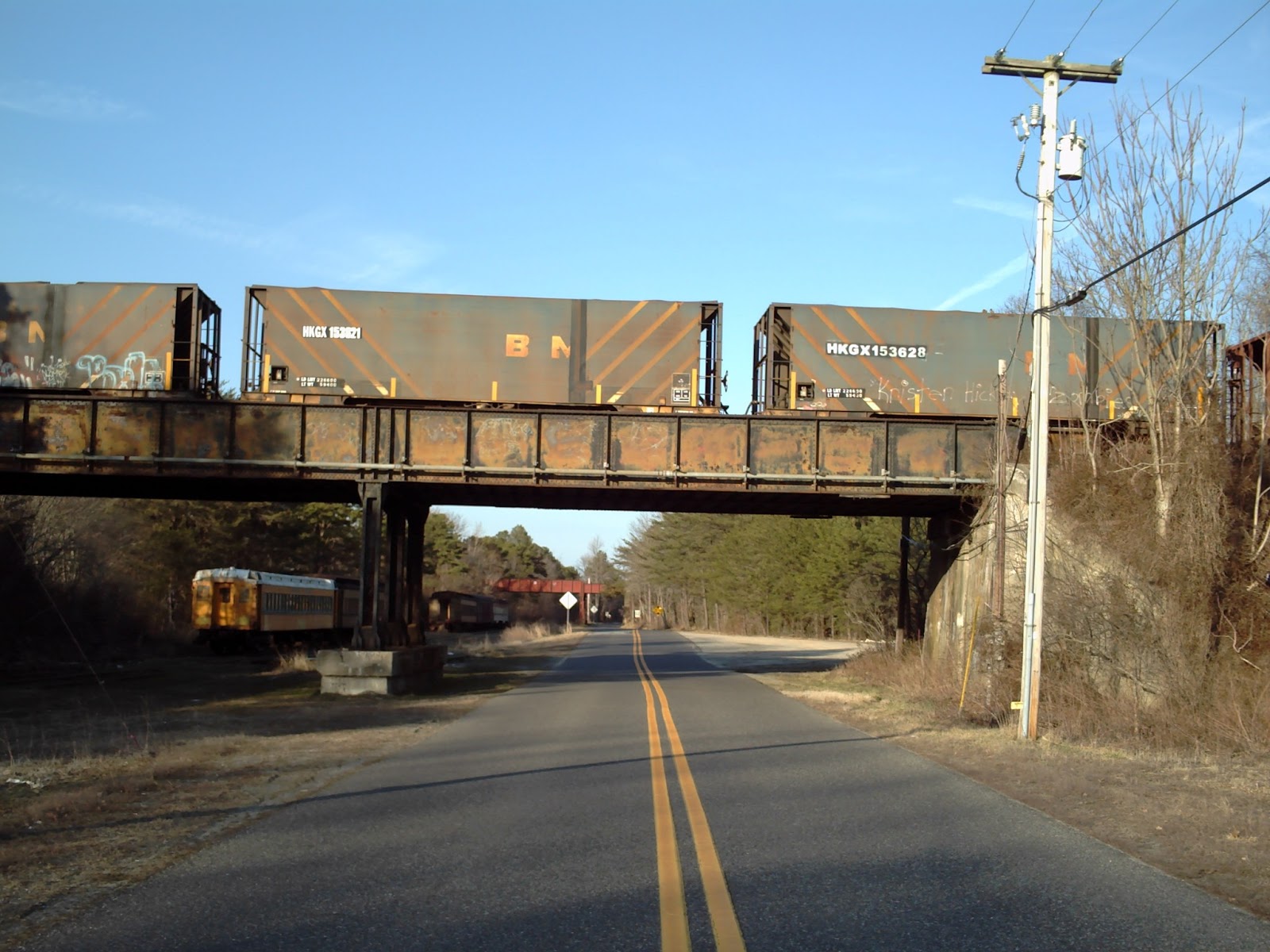
On trip in New Jersey last week I took a wrong turn. It should have been a short cut but instead I got lost. I had no idea there was a small independent railroad hidden in the pine forests west of Hammonton. I'm not a big train enthusiast even though the whole Philadelphia area is steeped early railroad history. I just enjoyed the surreal experience of stumbling into a site like this.


One of my new partners in crime is Will The Blind Artist. He actually can see but because of complications from cataract surgery he's been left with 20 / 200 vision. I like Will because he'll ride shotgun with me and not complain about my driving.  Will is a recognized artist with many shows in museums around the country but one interesting thing is Will's former profession as an art therapist in a prison.  Art Therapist isn't some you expect to see on a badge.

 
Safe travels to you. Get lost, have an adventure and find something unusual by physically looking for it. There's treasure everywhere if you're willing to go out and find it. Be a kid at least one day a week.